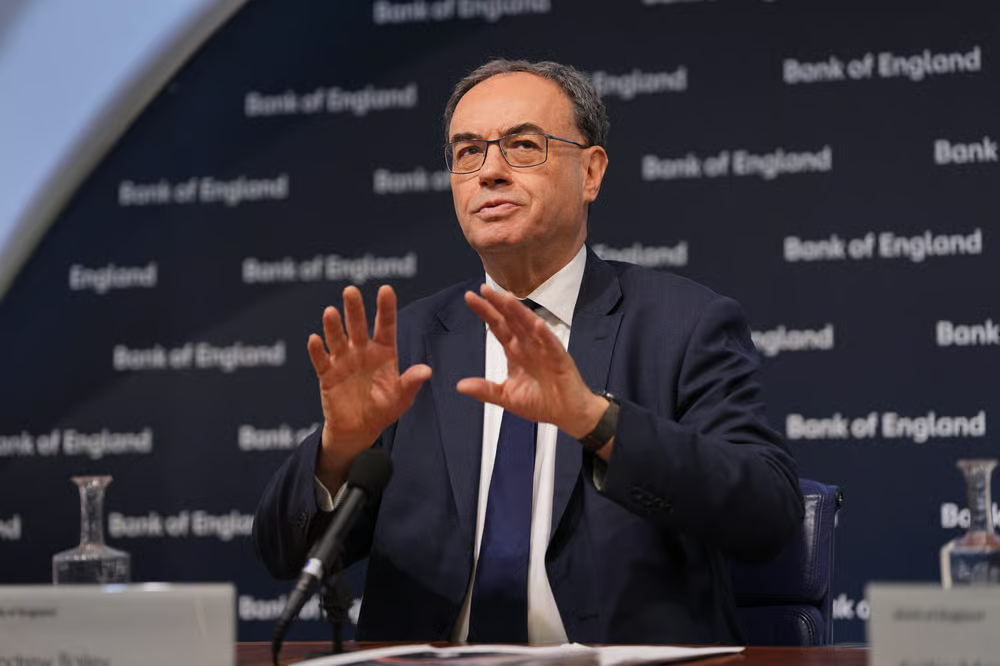
Andrew Bailey has issued a stark warning regarding the global political landscape, asserting that the “rise of so-called populism makes the whole task harder” for international agencies attempting to manage the global economy.
The Governor of the Bank of England emphasized that international institutions must actively challenge populist narratives. His comments come at a critical juncture, following a unified stand by global central bank leaders to defend the US Federal Reserve against increasing political threats to its operational independence.
The Role of Independent Oversight
Speaking to the Bellagio Group—an influential assembly of economists and central bankers—Bailey highlighted that the primary value of international bodies lies in their ability to provide objective, often uncomfortable, truths about the state of global finances.
“Part of the purpose of international agencies is that from time to time they have to tell us what we don’t want to hear, let alone act upon. Of course, they have to be accountable for the accuracy and quality of the assessment. But, accepting that, we have to call out messenger shooting.”
The Three Pillars of the Populist Threat
Bailey outlined how populist movements fundamentally undermine the mechanisms of global economic cooperation by shifting blame and eroding public confidence:
- Deflecting Responsibility: He noted that populism has a “tendency to attribute unfavourable conditions to outside forces, rather than point to shared challenges”.
- The Erosion of Trust: He warned that these movements are “encouraging a decline in trust such that institutions – domestic and international – are viewed as distant, unresponsive and acting for the benefit of powerful and uncontrollable interests”.
- Impeding Risk Assessment: By attacking the “messengers” of economic data, Bailey argues that these political shifts make it increasingly difficult for agencies to identify and correct imbalances before they lead to crises.
The Governor’s intervention underscores a growing concern among technocrats that the politicization of economic policy could lead to increased market volatility and a breakdown in the international cooperation required to sustain global growth.