Key Risks for the FTSE 100: Inflation, Geopolitics, and Stagflation Fears
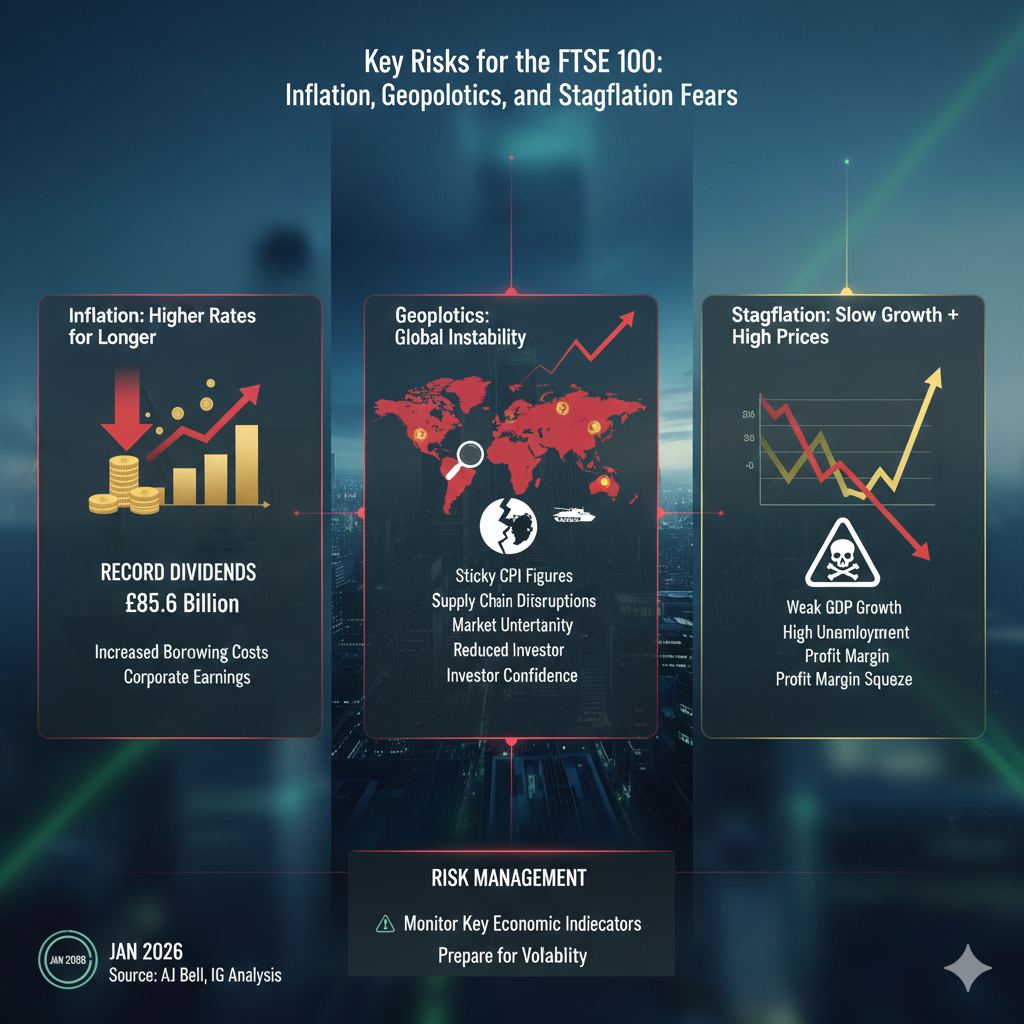
While the FTSE 100 enjoys a broadly bullish outlook for 2026, prudent traders and investors must remain acutely aware of the significant risks that could derail its trajectory. Foremost among these is persistent inflation, which, if it proves stickier than anticipated, could force central banks, including the Bank of England, to maintain higher interest rates for longer. This would increase borrowing costs for businesses, squeeze consumer spending, and reduce the attractiveness of equities.
Secondly, geopolitical instability remains a significant concern. Ongoing conflicts, escalating trade tensions, or unexpected political upheavals in key regions (especially those where FTSE 100 companies have significant revenue exposure) could trigger sharp market downturns. Such events introduce uncertainty, disrupt supply chains, and can lead to sudden shifts in investor sentiment away from risk assets.
Finally, the specter of stagflation – a combination of high inflation and slow economic growth – presents a particularly challenging scenario. If the UK economy struggles to generate robust growth while battling elevated price pressures, corporate earnings could suffer significantly, leading to a de-rating of the index despite its currently attractive valuation. Monitoring key economic indicators such as GDP growth, CPI figures, and unemployment rates will be crucial for assessing these evolving risks.